_______________________________________________________________________________________________________
Zapworks and AR Design
_______________________________________________________________________________________________________
In the third week of the emerging technology module we looked at Zapworks, a cloud-based augmented reality design and web hosting service. We explored the feature of the tool that let us upload our own augmented reality projects into the web, to be able to view them at any time through our phone camera. In the workshop we followed a tutorial to create the projects inside Unity, after adding the zapworks plugin to the engine, the process involved adding a tracking image and a model to activate when that tracking image is being observed by the camera.
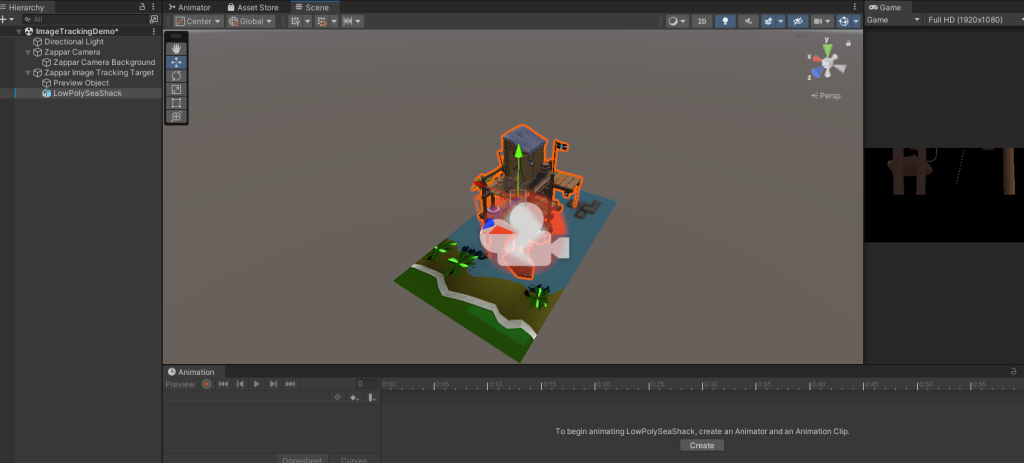
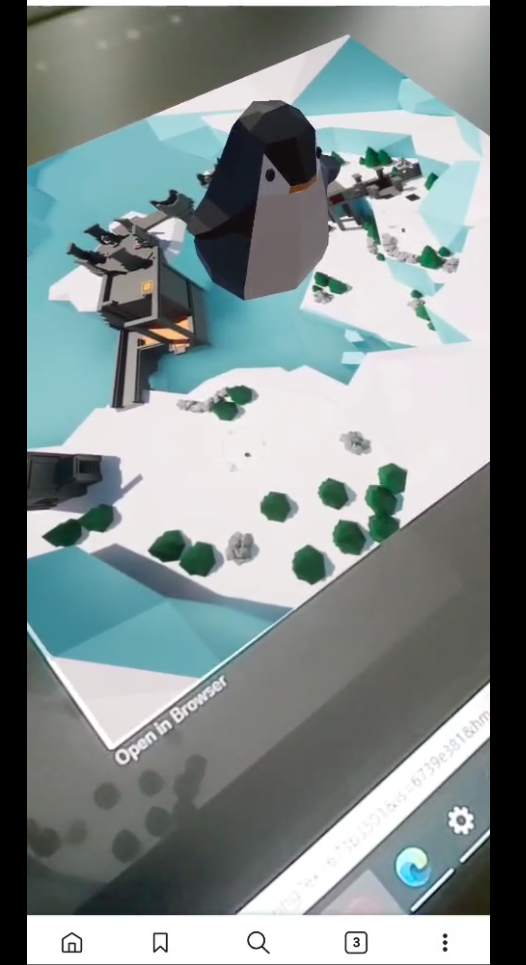
Uploading the project to Zapworks provides a trigger code to view your AR project through. When you scan the trigger code it takes you to a url which prompts camera access. Upon granting access you can see your project appear in augmented reality whenever you view the tracking image. This specific type of trigger image augmented reality allows for a much more consistent experience in viewing the 3D model as the tracking and orientation of the model is enhanced by the reference tracking image.
This is an incredibly convenient tool for storing and sharing augmented reality projects for similar reasons as FrameVR last week. I feel like the ease of use of web hosted projects is a great benefit as it is a very fast process and again, requires very little to no prior experience with virtual reality. If I were to use this technology in my research project I could aim to develop some kind of educational app or perhaps a augmented reality information panel for a convention or a project meeting.
_______________________________________________________________________________________________________
User Experience Considerations
_______________________________________________________________________________________________________
Unlike with virtual reality, augmented reality doesn’t block out the rest of the world to replace it with a virtual one but rather adds and integrates virtual elements into the user’s surroundings. This does not mean however that it cannot still be a distraction and therefore a potential hazard for users who aren’t focusing on their surroundings.
Another major consideration is the performance of the model or video, as an input delay or tracking lag can make the experience extremely jarring and immediately break immersion.